

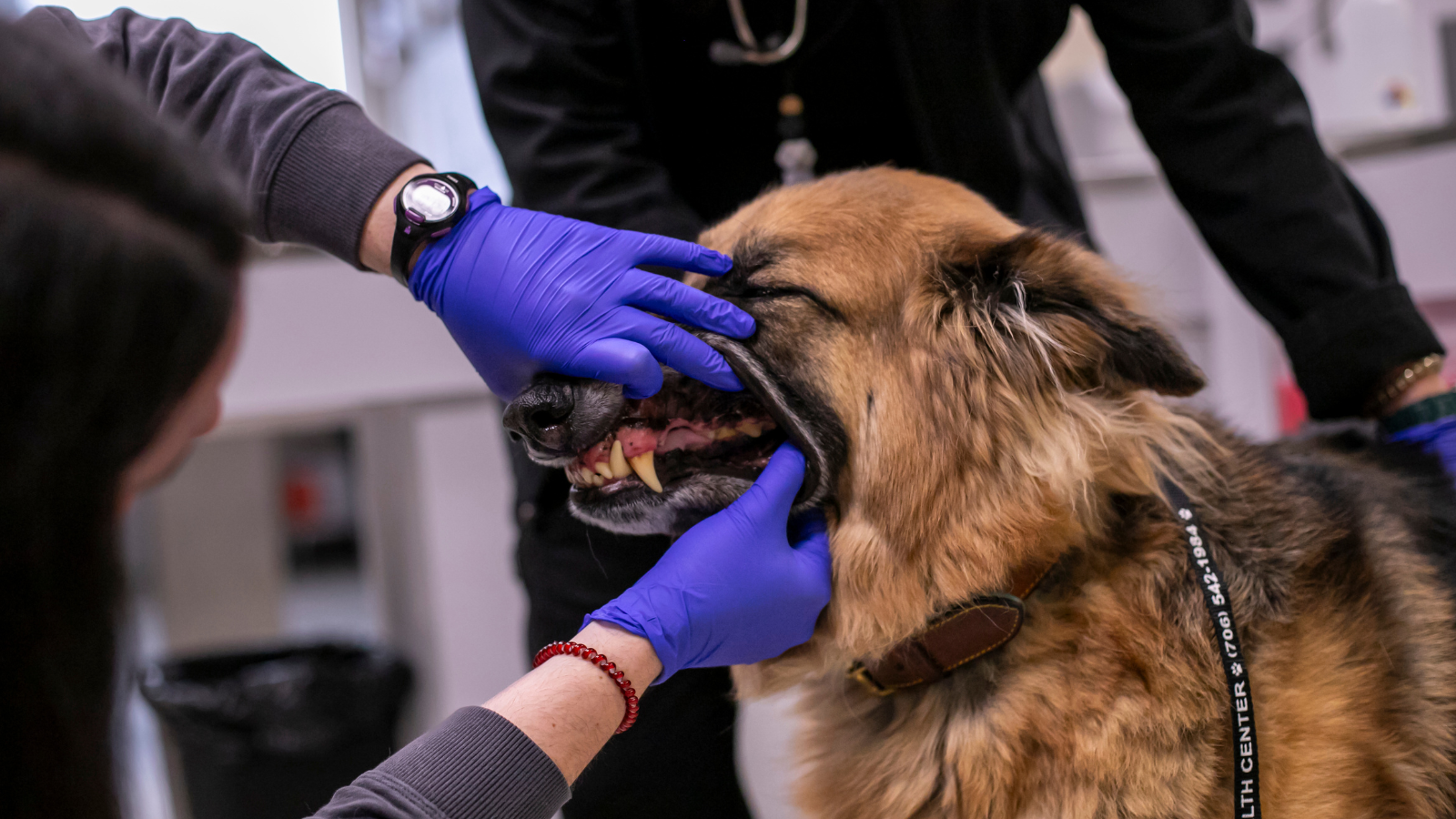
February is Pet Dental Health Month, a great reminder that oral health plays a major role in your pet’s overall well-being. Experts at the UGA Pet Health Center emphasize that prevention, early care, and regular evaluations can help pets live healthier, more comfortable lives.
Early Signs of Dental Disease in Dogs and Cats


The first sign of periodontal (gum) disease seen during an exam is gingivitis, which appears as redness along the gumline. Many pet owners assume teeth only need cleaning when there is heavy visible tartar, but dental disease often begins long before buildup becomes obvious.
- Dental disease may be hidden below the gumline, where it may not be visible.
- By age 3, about 80% of dogs and cats have some form of periodontal disease.
- Untreated it can cause pain, reduced appetite, and even bacteria spread to other organs.
How to Prevent Dental Disease at Home
Daily home care is the best defense against dental disease.
Best Practices for Dog and Cat Dental Care
- Daily brushing with pet-friendly (non-fluoride) toothpaste and a soft-bristled toothbrush.
- Introducing brushing early—ideally during puppy or kitten stages.
- Start slowly by letting your pet taste the toothpaste first, then introduce a brief brushing the next day, gradually increasing the time each day until you build up to a full brushing routine.
After about 24 hours, plaque hardens into tartar that requires professional cleaning. However, any home care is beneficial, including:
- Brushing (ideally daily, but every little bit helps)
- Dental treats or chews
- Dental diets
- Water additives
The Veterinary Oral Health Council evaluates dental products for proven effectiveness and provides a list of recommended options for pet owners.
Signs Your Pet May Need a Professional Dental Cleaning
The most common sign of dental disease is bad breath. However, many pets experience oral pain without obvious symptoms.
Watch for:
- Preference for soft or canned food
- Dropping food while eating
- Decreased appetite
- Pawing at the mouth
- Head shaking or avoiding food
- Excess drooling
- Nasal discharge
What Is a COHAT? (Comprehensive Oral Health Assessment and Treatment)

When gingivitis or advanced periodontal disease develops, your veterinarian may recommend a Comprehensive Oral Health Assessment and Treatment (COHAT). This is much more than a routine cleaning.
A COHAT includes:
- Anesthesia for full and safe oral examination
- Complete oral examination and charting of each tooth
- Full-mouth dental X-rays to detect disease below the gumline
- Cleaning and polishing
- Periodontal treatment or oral surgery if needed
Veterinarians aim to preserve teeth whenever possible. Extractions are only performed when necessary to relieve pain or prevent further damage. Many pets feel significantly better after treatment.
How Often Should Pets Have Dental Exams?
Most dogs and cats should have a dental evaluation every 6–12 months, depending on their age, breed, and individual risk factors.
While February highlights pet dental health, experts agree that good oral care should be a year-round priority. With consistent home care and regular veterinary visits, pet owners can help prevent disease and support their pet’s long-term health and comfort.

Schedule an Appointment
Protect your pet’s long-term health with professional pet dental care.
To schedule an appointment, contact the UGA Pet Health Center at (706) 542-1984.
Conveniently located at 125 Veterinary Loop, Athens, GA, the clinic is part of the University of Georgia College of Veterinary Medicine campus and provides comprehensive preventive and advanced veterinary services for dogs and cats.
Healthy teeth support a healthy life—and it starts with prevention.


