

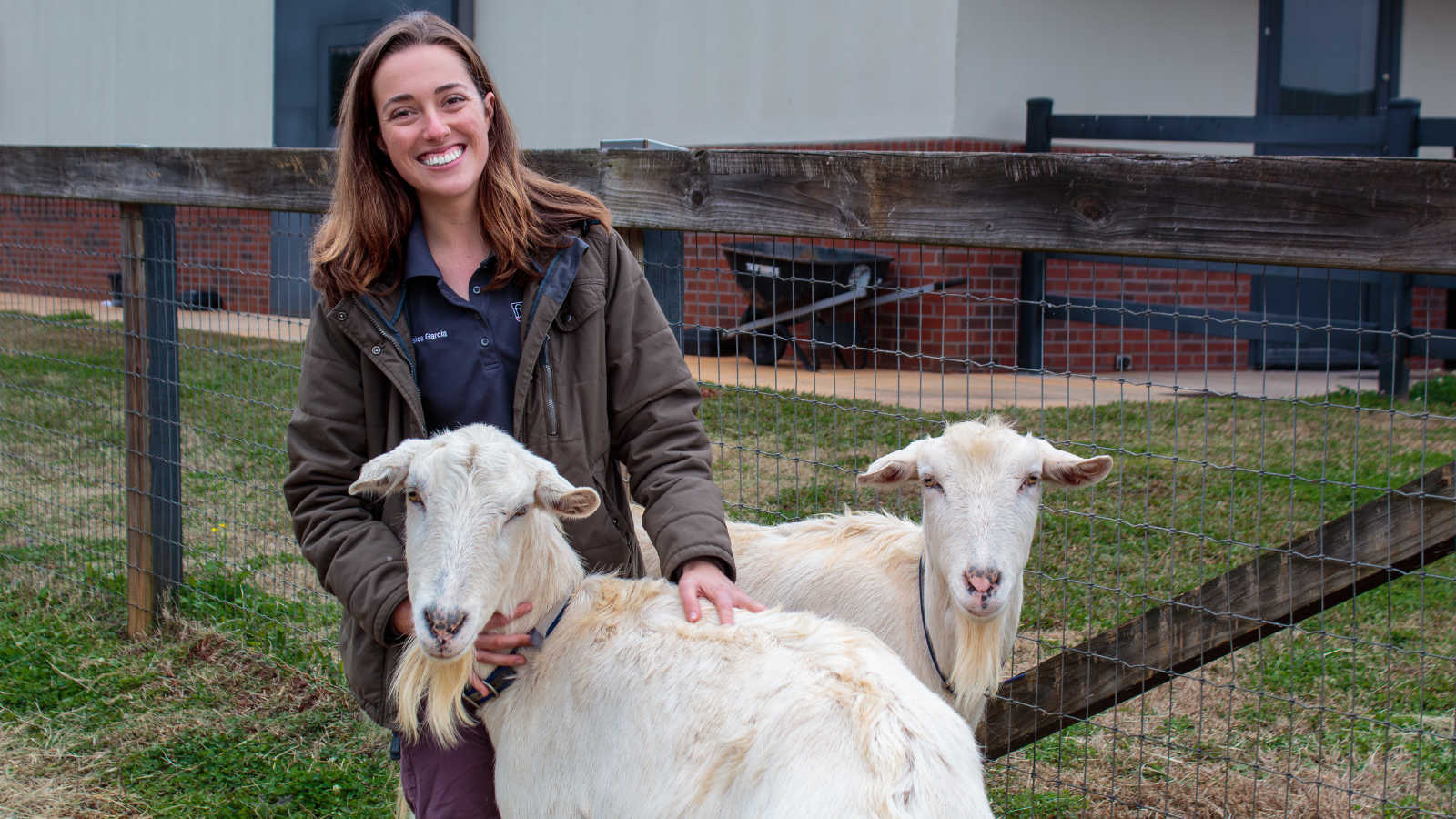
As temperatures drop, winter can present unique challenges for horses and farm animals. Cold weather can affect nutrition, hydration, and overall management, making proactive care essential.
Experts from the University of Georgia College of Veterinary Medicine offer practical guidance to help owners navigate seasonal challenges to ensure your animals stay happy and healthy all season long.

Ask the Experts: Dr. Jessica Garcia
Dr. Garcia is a Clinical Assistant Professor with our Large Animal Field Services team.
Provide adequate shelter
Provide a dry, draft-free shelter so animals can escape wind, rain, and freezing temperatures. Clean, dry bedding and good ventilation help prevent cold stress and respiratory issues.
Keep water unfrozen and accessible
Ensure water stays clean and unfrozen. In general, animals drink less if it’s too cold so heated or insulated waterers help maintain proper hydration. Additionally, drier winter feeds and reduced moisture-rich forage means your animals may need extra water to ensure they stay hydrated.
Adjust nutrition for colder weather
Many farm animals require additional calories in winter because they expend more energy to stay warm. Monitor body condition regularly and offer minerals to maintain overall health. Free-choice, high-quality hay, with supplemental grain offered as needed will help support animals that are thin, pregnant, or elderly.
Maintain hoof and coat care
Check hooves often and watch for cracks, thrush, or overgrowth. Keep coats clean and dry to prevent skin infections and look out for signs of weight loss which can hide under winter hair/fiber. Monitor for lice, which spread easily during the winter due to close animal huddling to stay warm.
Prepare for emergencies
Establishing care ahead of time helps ensure timely emergency support. Keep basic supplies on hand and ensure clear access for veterinary vehicles.


